Skip to content

Table of Contents
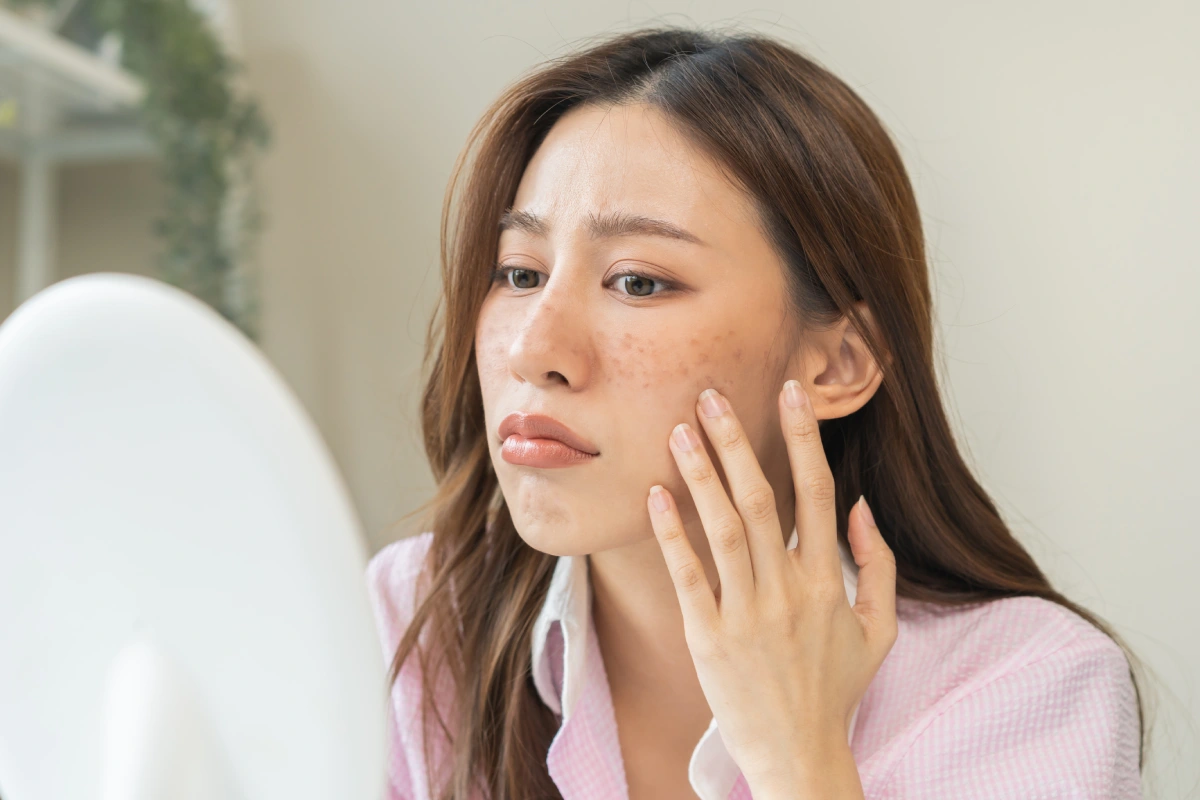
Dark spots, acne marks, and dullness rarely show up alone, and treating them one by one can feel like a slow, frustrating process. When skin starts to look uneven overall, it’s often a sign that renewal has slowed down, allowing discoloration and texture issues to linger. Chemical Peels offer a more efficient approach by improving how the skin refreshes itself, helping tone, clarity, and brightness come back into balance in a way that feels noticeable and cohesive.
Why Dark Spots, Acne Marks, and Dullness Tend to Overlap
These concerns often stem from the same sequence of events. Following inflammation, such as a breakout, the skin can produce excess pigment. That pigment settles into the upper layers, producing visible marks. At the same time, if dead skin cells are not shedding evenly, those marks stay in place longer.
Dullness develops in a similar way. When the surface layer becomes congested with old cells, light does not reflect evenly. Skin can look tired, even if it is otherwise healthy.
The mentioned combination will create a layered effect:
- Pigment sits on the surface
- Texture becomes less refined
- The overall tone looks inconsistent
What Chemical Peels Change in the Skin
Chemical peels are renowned for applying a controlled solution that exfoliates the outer layers of the skin. This action encourages the removal of damaged or uneven cells. It even supports the emergence of newer, more uniform skin underneath.
As this process unfolds, several changes happen at once:
- Pigmented cells gradually lift away
- Surface texture becomes smoother
- Skin reflects light more evenly
Because this approach focuses on how the skin renews itself, it naturally supports improvements across multiple concerns rather than isolating a single one.
For those aiming for a treatment for uneven skin tone and dullness, the chemical peel method helps reset how the skin sheds and rebuilds.
Addressing Dark Spots Through Controlled Exfoliation
Dark spots often sit within the upper layers of the skin. When those layers are gently exfoliated, the concentration of pigment decreases over time.
In this condition, a chemical peel for dark spots becomes ideal. This is because it works by encouraging the gradual shedding process. Instead of forcing rapid change, this specific peel allows the skin to transition in a more balanced manner. With consistent treatments, the tone becomes more even, and the contrast between areas softens.
In addition, some peel formulations include ingredients that help regulate pigment production. This supports longer-term clarity rather than temporary improvement.
How Acne Marks Respond to Peels
Acne marks can appear as flat discoloration or as subtle textural changes. Both types benefit from improved cell turnover.
A facial peel for acne marks and discoloration supports the skin in two ways. First, it helps fade residual pigment left behind after breakouts. Second, it smooths the surface by encouraging more uniform skin regeneration.
Over time, areas that once appeared uneven begin to blend more naturally with the surrounding skin. The improvement is gradual, but it tends to look more consistent because it follows the skin’s natural renewal process.
Restoring Brightness Without Overcomplication
Dullness is often the most noticeable concern since it affects the entire face. Even when dark spots are mild, a lack of brightness can make them stand out more.
By removing the buildup of dead skin cells, peels help restore a more reflective surface. Skin will begin to look clearer, not because it has been altered dramatically, but because it is functioning more efficiently.
This effect makes chemical peels a practical skin resurfacing treatment for uneven skin tone. This is especially true when brightness and clarity are both priorities.
What the Treatment Process Feels Like
The experience of a peel depends on its depth and formulation. During the application, a mild tingling or warming sensation is common. This typically subsides shortly after the treatment is completed.
In the days that follow, the skin may feel slightly dry or tight. Light peeling or flaking can occur as the outer layer sheds. This stage is temporary and part of the renewal process.
Most people begin to notice changes within a week, with continued improvement as the skin completes its cycle.
Building Results Over Time
One session can improve clarity, but a series of treatments often produces more noticeable and lasting results. Each peel builds up on the last, and this helps the skin maintain a more consistent pattern.
Spacing between treatments gives the skin time to recover and respond effectively. Over time, dark spots fade further, acne marks become less visible, and the general tone looks more balanced.
Here, the principle, “consistency matters over intensity,” applies. Gradual progress tends to produce results that look natural and stable.
Who May Benefit Most From This Approach
Patients dealing with more than one concern at the same time often see the most noticeable changes. Skin that shows a combination of discoloration, uneven texture, and reduced brightness responds well to treatments that address the renewal cycle itself.
This approach is also helpful for those who prefer a structured plan rather than layering multiple separate treatments. By focusing on one method that supports several outcomes, the chemical peel process becomes more straightforward.
A consultation helps determine the appropriate peel type and schedule based on individual skin characteristics.
Afzal Clinics’ Chemical Peels in Minneapolis, Fridley, and Edina, MN
At Afzal Clinics, chemical peels in Minneapolis, Fridley, and Edina, MN, are designed to address multiple concerns through a structured approach to skin renewal.
The clinic offers the ZO 3-Step Peel®, which combines salicylic acid, lactic acid, and trichloroacetic acid (TCA), followed by a retinol cream. This combination works across different layers of the skin to exfoliate damaged cells and encourage new cell growth.
Each component plays a role in the overall outcome:
- Salicylic acid helps clear pores and supports a smoother texture
- Lactic acid promotes gentle exfoliation while maintaining hydration balance
- TCA penetrates deeper layers to support more significant renewal
- Retinol enhances cell turnover and encourages collagen production
This blend leads to controlled shedding of the outer layer, helping improve concerns such as melasma, post-inflammatory hyperpigmentation, acne, and uneven texture.
If your skin needs a reset, book your consultation today.
Frequently Asked Questions
Can I combine chemical peels with other treatments?
Yes, chemical peels can be combined with treatments like Botox and dermal fillers, but a professional consultation is important to ensure proper timing and compatibility.
How many sessions are typically needed to see improvement?
Most people notice visible changes after one session, but a series of treatments often provides more consistent and longer-lasting results.
Are chemical peels safe for all skin types?
Many modern chemical peels are formulated to be safe for a wide range of skin types, though the right peel should always be selected based on individual skin needs.