Skip to content
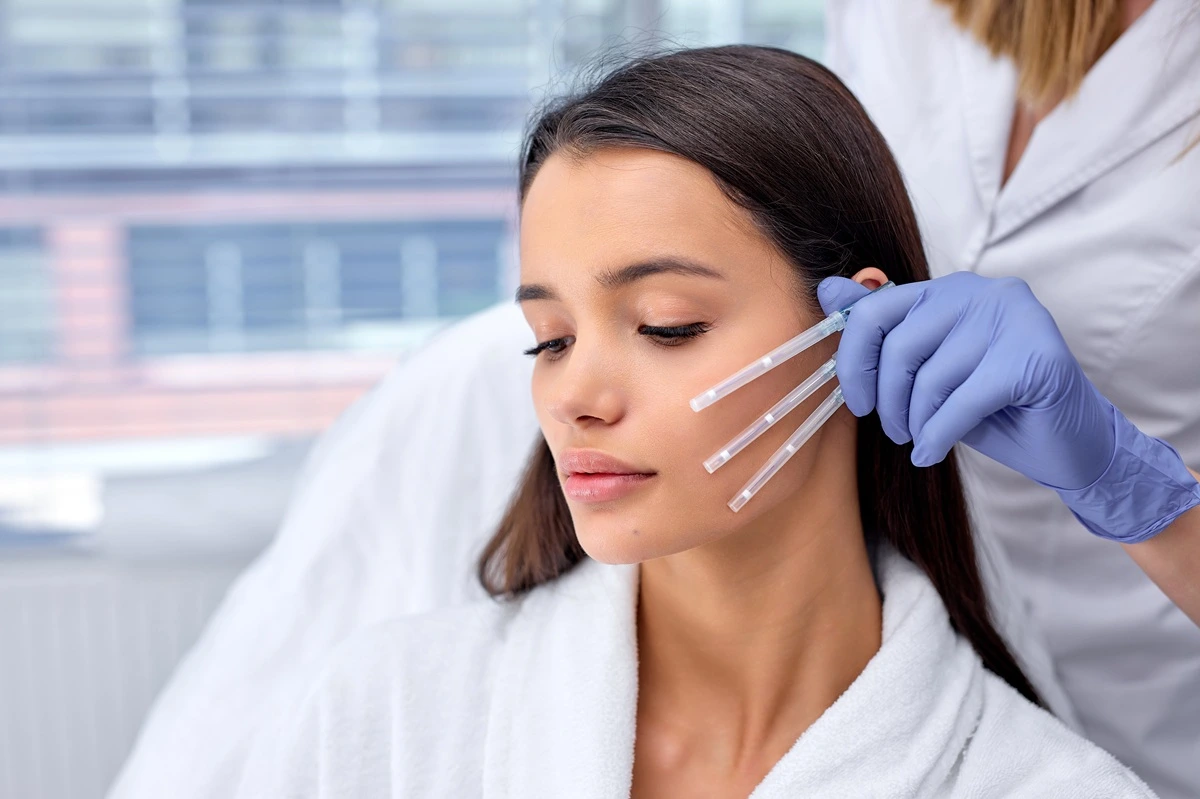
Table of Contents
If you want a more defined jawline, lifted cheeks, and a refreshed lower face without surgery, a PDO Thread Lift is one of the most effective ways to get there. This in-office option supports sagging tissue, refines facial contours, and encourages collagen for a firmer look, all with minimal downtime and natural-looking results that still feel like you.
What a PDO Thread Lift is Actually Doing Under the Skin
A thread lift is often described by its “lifting” effect. However, it helps to break down what that means.
A PDO thread lift for sagging skin uses dissolvable threads. These are placed beneath the skin to create support in targeted areas. The threads act like an internal scaffolding. That scaffolding can reposition tissue slightly and help improve facial contours.
Over time, as the body responds to the thread material, collagen production may increase around the placement sites.
The latter effect matters. Many PDO thread patients are not only chasing lift. They also want firmer skin texture, improved definition, and a smoother transition between the midface and lower face. This combination of structure and collagen support is a big reason thread lifting is being chosen more often.
Why Demand is Rising Now
People are not aging differently, but expectations have changed. Today, patients are more informed, and many are looking for procedures that match their stage of aging. This approach prevents them from jumping straight to the most aggressive option.
Here are a few reasons PDO thread lift benefits are being discussed more frequently:
- Scheduling is realistic. The procedure can be done in-office and ideally fits busy work and family routines.
- The change is subtle yet meaningful. Many patients prefer gradual definition, and not a dramatic transformation.
- It complements other treatments. The threads pair well with skincare, lasers, and injectables, depending on goals.
- It speaks to modern aesthetics. The preference now is refreshed and rested skin, not tight or over-corrected.
What “Before and After” Results Really Represent
Patients normally ask about PDO Thread Lift before and after photos. This step can be helpful. However, the best way to interpret them is through the lens of anatomy.
Before and after results often show improvement in:
- Early jowling and jawline blur
- Midface softening and mild cheek descent
- Lower face heaviness
- Skin creasing that appears more prominent when tissue drops
A strong outcome usually looks better structure and smoother angles rather than a stretched look. The most satisfying results tend to come from realistic expectations with a plan that addresses the level of skin laxity. Significant laxity may need surgery for a comparable lift.
Cheeks and Jawline Are Popular for A Reason
Aging often appears first in the middle and lower parts of the face. The cheeks may start to lose their lifted look, and the jawline may become less defined. Threads are often chosen because they can help improve both areas with one treatment.
A PDO thread lift for cheeks and jawline is typically designed to create a more supported midface and a cleaner lower-face outline. Many patients describe this as looking more “defined” in photos. They also notice that makeup sits better because the facial contours feel more stable.
The objective is not to create sharp angles that do not match your features. Rather, the procedure will restore gentle definition that looks consistent with how you have always looked.
Skin Tightening is Part of the Appeal
Some patients are less concerned about the “lift” effect and more focused on firmness.
Skin can start to feel looser or thinner with age, weight changes, and collagen decline. Thread placement can support a tightening effect in two ways: immediate support from the structure of the threads and gradual collagen response afterward.
A PDO thread lift for skin tightening can be especially appealing for patients who are seeing early laxity but do not want the volume that dermal fillers offer. Threads are not a replacement for filler when volume loss is the main concern. However, they can be a smart option when patients desire to address laxity and contour.
Threads Compared to Fillers and Botox
Confusion is common here, so a clear comparison would help:
- Dermal fillers can restore volume and improve structure. But, they do not truly lift descended tissue in a lasting manner.
- Botox relaxes muscle activity. It can effectively soften expression lines. This brand can also influence the neck and jawline in specific patterns. However, Botox does not physically lift sagging tissue.
- Threads are aimed at repositioning and supporting tissue. They are often referred to as a non-surgical facelift with PDO threads. This is because they are one of the few non-surgical approaches that can target actual lift, not just smoothing or volume.
Many patients do best with combination planning, but it should be based on what is truly happening in the face: laxity, volume loss, skin quality changes, or all three.
The Role of “Facial Rejuvenation Threads” in long-term planning
It will help to think of facial rejuvenation threads as part of a timeline and not of a one-and-done event. Many aesthetic patients utilize threads as a bridge between early aging changes and later surgical options (if surgery is later desired). Others use threads as a maintenance strategy.
In a long-term plan, threads may support:
- Ongoing collagen stimulation strategies
- Periodic contour refreshes
- A conservative approach to aging changes
Still, the best plan is personalized. Some faces may need more help in the midface, while others require jawline support.
What to Expect During PDO Thread Lift Treatment and Recovery
Most thread lift appointments include consultation, mapping, numbing, placement, and aftercare instructions. Some of our PDO thread lift patients report the procedure as tugging and pressure rather than sharp pain.
Recovery per patient still varies, but many of them could experience mild swelling, tenderness, or bruising. PDO thread lift aftercare typically focuses on protecting the placement while tissue settles. Common recommendations include avoiding heavy exercise for a short period, skipping facial massage, and following provider guidance on sleeping position and skincare.
Who Tends to be the Best Candidate For PDO Threads
Thread lifts are most satisfying to patients with mild to moderate laxity. They are also those with realistic expectations. Plus, a thread lift can refine and support.
A provider evaluation is critical since outcomes depend on certain factors: skin quality, tissue heaviness, and facial structure. It is important to emphasize that the “best candidate” is not a specific age. It is a face with the right amount of laxity for a thread-based lift.
Afzal Clinics: PDO Thread Lift in Minneapolis and Edina, MN
Afzal Clinics is a smart choice for patients seeking a noticeable lift but not ready to commit to surgery. If a traditional facelift feels like too big a step right now, a non-surgical facelift in Minneapolis & Edina, MN, offers a more approachable path to a naturally refreshed, more defined look. You get real lifting power without the high price tag, extended downtime, or invasiveness of a surgical procedure.
If you want a plan that delivers lift now and keeps you in control of your aging timeline, Afzal Clinics is the place to start. Schedule a consultation to discuss your goals, evaluate your facial structure, and learn what a customized thread approach could do for your cheeks, jawline, and overall facial contour.
Unlock Your Youthful Glow- Book Your Thread Lift Now.
Frequently Asked Questions
What is a PDO Thread Lift?
A PDO Thread Lift is an in-office treatment that places dissolvable threads under the skin to create visible support and encourage collagen for a firmer look.
How long do results last?
Results vary, but many patients enjoy the look of a Non-surgical facelift with PDO threads for about 12 to 24 months, depending on skin quality and lifestyle.
Does it work for sagging skin?
A PDO Thread Lift for sagging skin can improve mild to moderate laxity by supporting tissue and refining facial contours.